EcommerceClient project
Radnar Supply
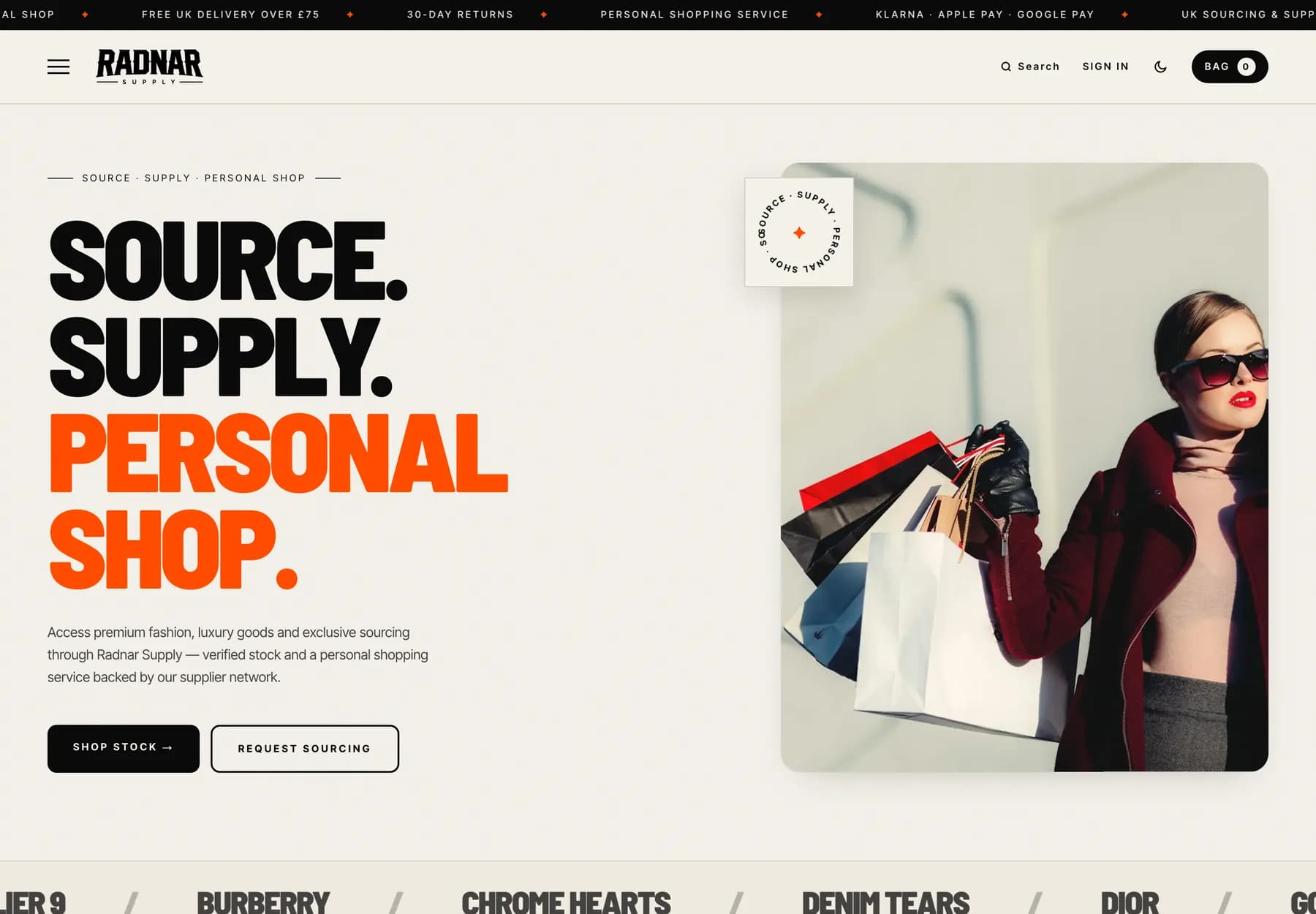
A premium fashion storefront with a personal sourcing service built in. Brief to live in seven days.
Most fashion stores sell what is in the warehouse. Radnar's real inventory is its supplier network, so every item a customer cannot find becomes a sourcing lead with a quote attached, not a dead end.
- Role
- Delivered by Shipyard end to end. Discovery, scope, product definition, art direction, design, build, QA, launch and handover.
- Timeline
- 2026
- Stack
- Next.js, Prisma, PostgreSQL, Stripe, Resend, UploadThing, GitHub Actions
- From signed brief to live site
- 7 days
- Scheduled follow-up jobs: abandoned bags and quiet quotes
- 2
- Admin areas the team runs the business from
- 14
Timeline from the signed proposal. Job and admin counts are from the delivered codebase.
The opportunity
The supplier network is the inventory
Radnar Supply sells verified designer clothing, footwear and fragrance below retail, and sources what it does not hold.
The business was trading on a hosted Shopify store. It worked, but the front end and checkout gave the brand little control, and the store had no way to capture the other half of the business: demand for things Radnar could source but did not hold.
The insight from discovery was that a fashion store usually treats “not in stock” as the end of the conversation. For Radnar it is the start of one. Demand for something unavailable should become a sourcing lead with a quote attached, not a dead end.
Users and context
Mobile, brand-aware and sceptical
Who
Mostly 18 to 34, UK-based, streetwear and hype-aware.
Device
Phone first. Most traffic arrives from a story or a link in bio.
Money
Price-sensitive but brand-conscious, and used to paying in instalments.
Doubt
Below-retail designer goods invite one question first: is it real?
From the client's own website brief.
Role and delivery
Seven days, planned in three blocks
Shipyard ran the whole engagement: discovery, scope, art direction, design, build, QA, launch and handover. A fixed, short timeline only works when the scope is decided before anyone opens a design file.
- 01
Days 1–2: plan
Brand intake, sitemap, content map and the technical foundation. Scope settled.
- 02
Days 3–5: design and build
Interface design, front end, back end, payments and the sourcing pipeline.
- 03
Days 6–7: test and launch
QA across devices, analytics, deployment, then handover of the admin.
- 04
After launch
Scheduled jobs keep working: abandoned-bag recovery and follow-up on quiet sourcing quotes.
Sell the network, not just the warehouse.
Key decision
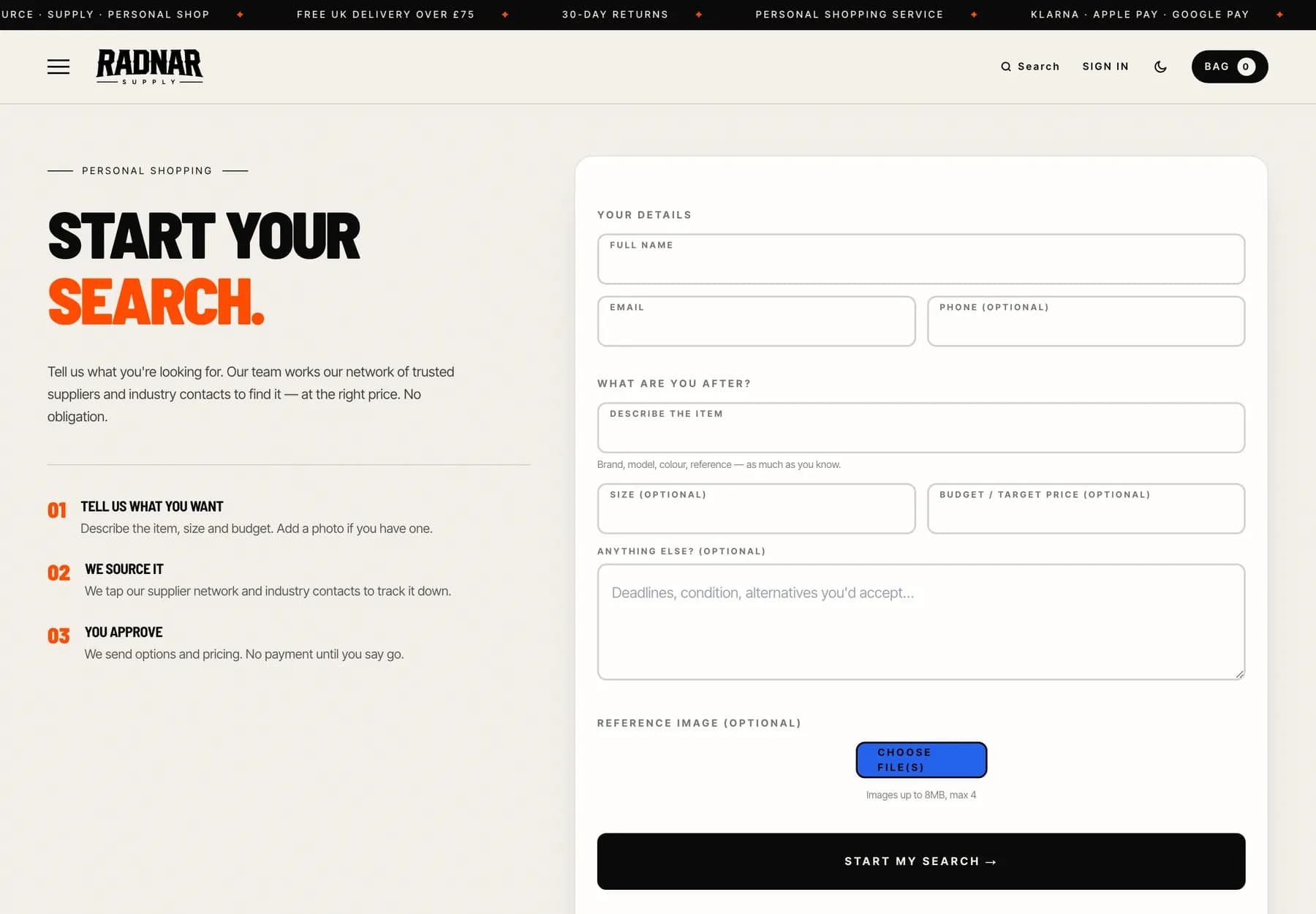
The sourcing service as a product, not a contact form
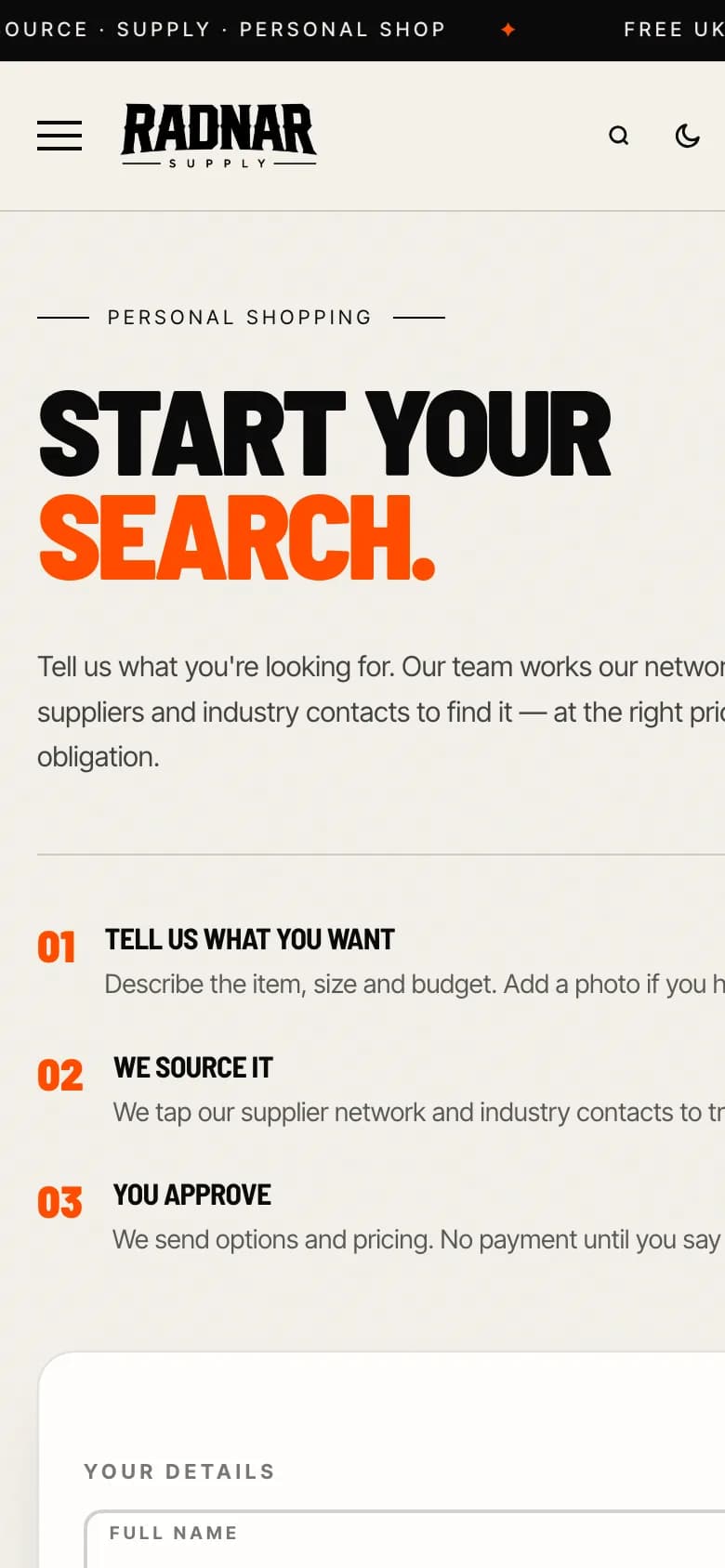
A customer says what they want, sets a budget and a deadline, and submits. The request lands in the admin as a tracked lead with a status, a quote can be attached, and a scheduled job chases quotes that have gone quiet instead of letting them expire in an inbox.
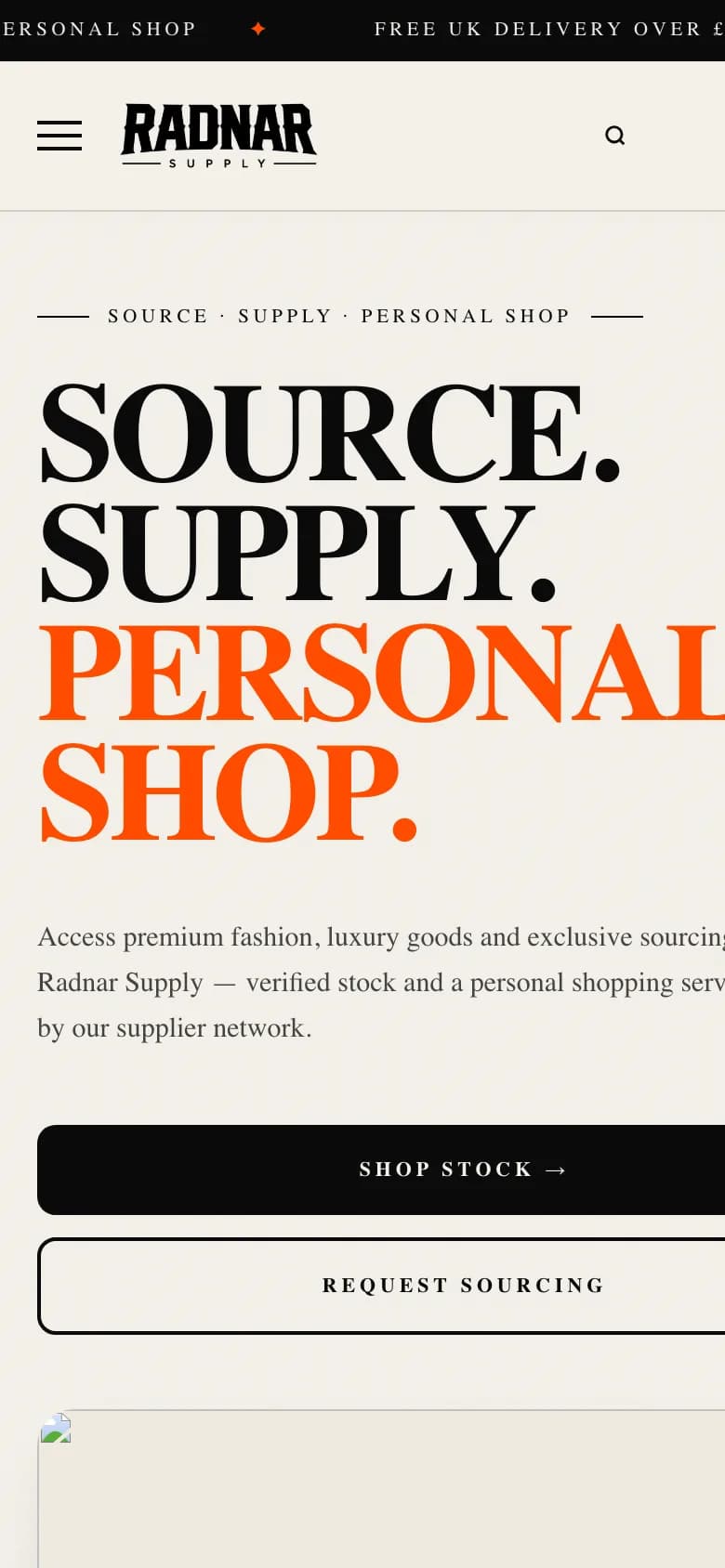
The homepage offers Shop stock and Request sourcing side by side, so nobody has to choose between browsing and asking. The request flow explains itself before it asks for anything: tell us what you want, we source it, you approve.
Customer journey
Two routes, one checkout
In stock or sourced, every customer ends up at the same checkout and the same order history.
In stock
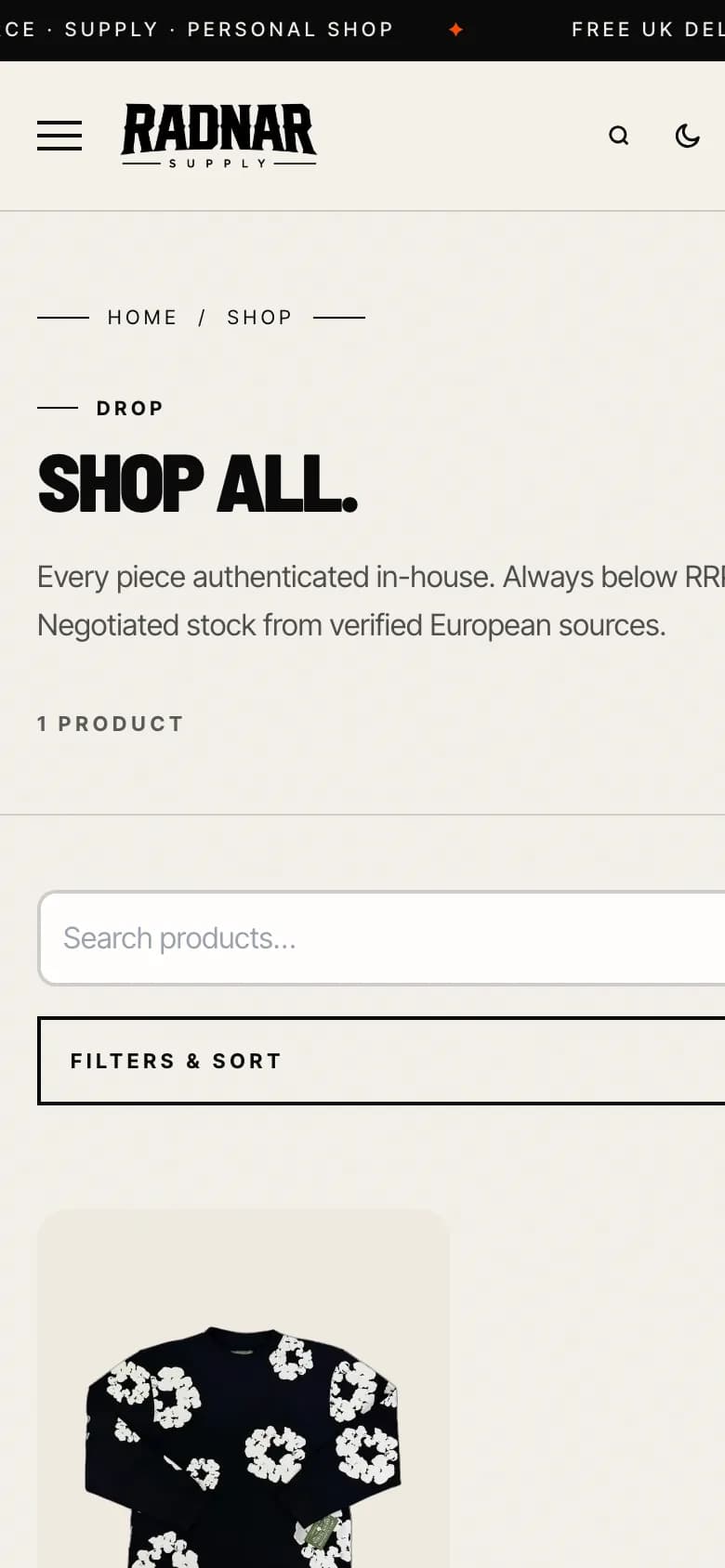
Category or brand, filtered catalogue, then a product page that answers size, verification and delivery before the bag.
Not in stock
Sourcing request with budget and timeline, a quote back from the supplier network, approval, then payment through the same checkout.
After the order
An account with order history and status, an email at each change, and the returns window stated before purchase rather than after.
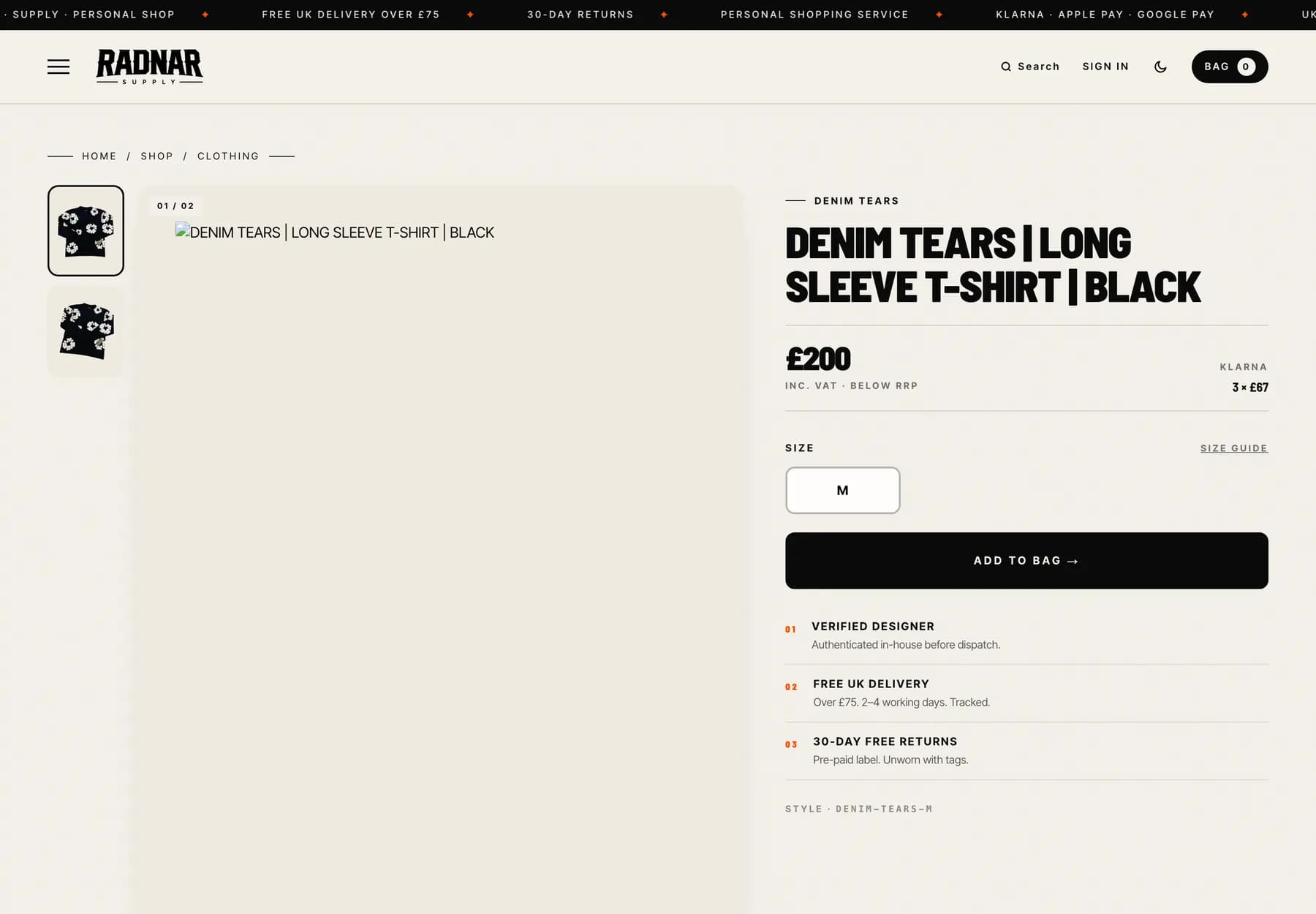
Product page
Every doubt answered next to the price
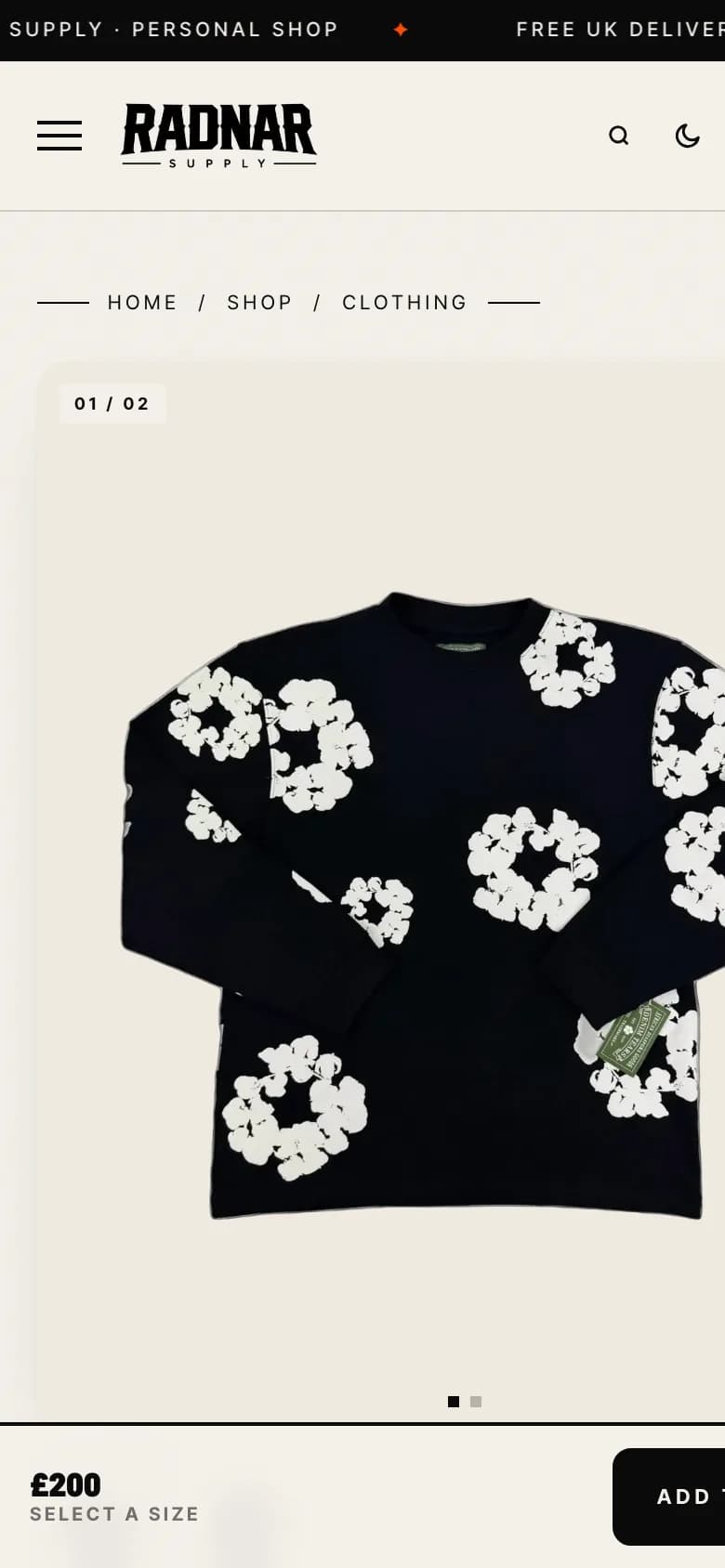
Gallery, brand, price and size sit above the fold. Directly under the buy button, a trust strip covers verified sourcing, free UK delivery over the threshold and the returns window: the three questions that otherwise send someone to the footer and then away.
Materials, delivery and authentication expand in place, so the customer never loses sight of the price. Klarna and Apple Pay are offered through Stripe Checkout, so the site never handles card details itself.
Visual design
Editorial, loud where it counts, quiet everywhere else
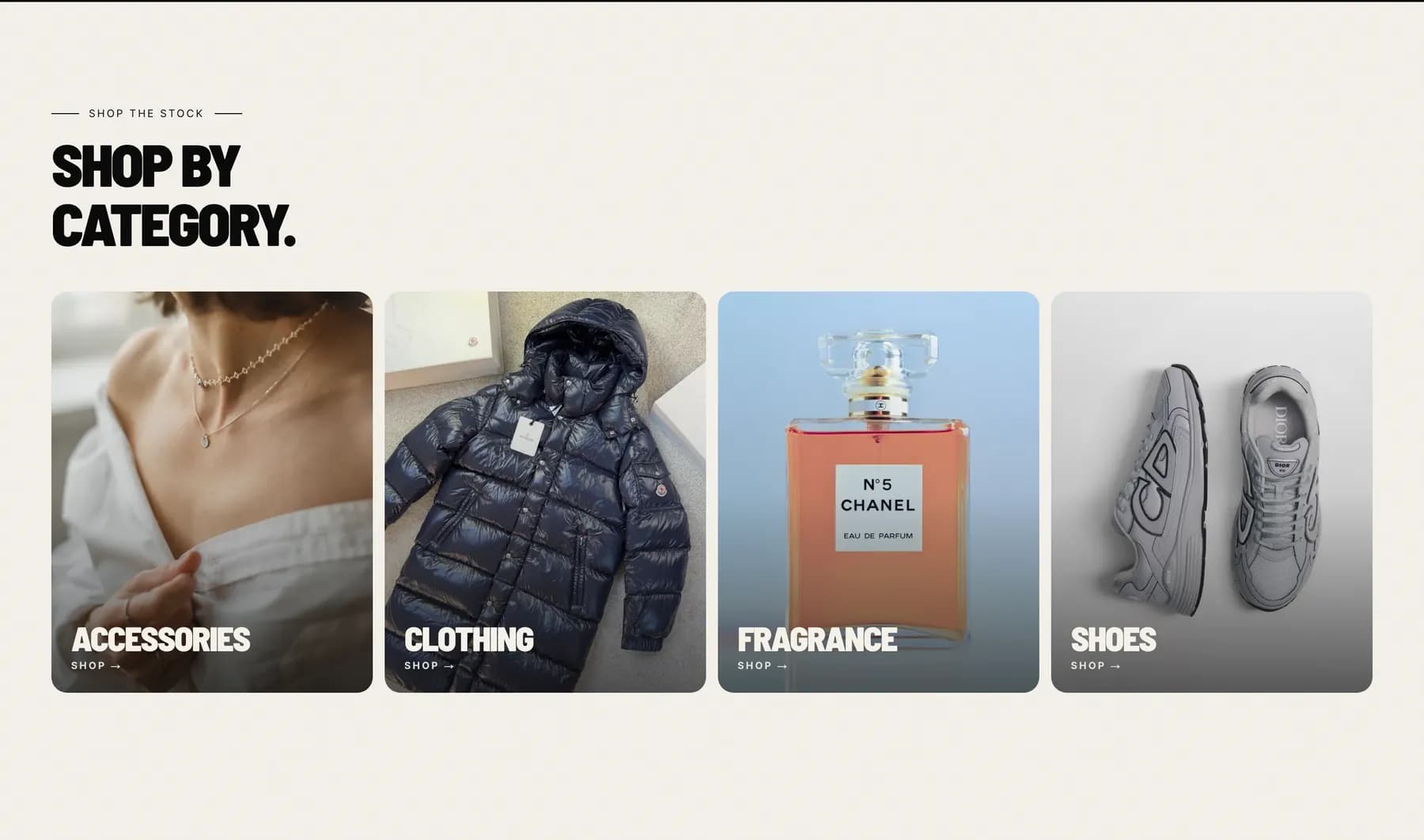
Heavy condensed capitals, a warm paper ground, near-black ink and one hazard orange used only where the brand speaks or the customer is asked to act. Product photography carries the colour.


Designed for the phone first
The headline holds its scale instead of shrinking to fit, the announcement bar collapses to one scrolling line, and the sourcing form puts the only field that needs a real keyboard last.
Technical implementation
Owned code, not a theme
Next.js and Prisma over PostgreSQL, Stripe Checkout, Resend and scheduled jobs on GitHub Actions.
Catalogue and brands
Products, categories, a brand directory and filtered browsing, all editable from the admin.
Checkout and payments
Stripe Checkout with webhook-driven order state, including Klarna and Apple Pay.
Sourcing pipeline
Structured requests, quotes, statuses and a scheduled job that follows up quiet quotes.
Transactional and broadcast email through Resend, including abandoned-bag recovery.
Accounts and orders
Registration, sign-in, password recovery, order history and status.
Admin and CMS
Products, brands, orders, sourcing requests, reviews, pages, journal, broadcasts and settings. Media through UploadThing.
Lessons
What a seven-day build teaches
Speed comes from scope
Seven days was possible because the scope was settled in the first two days. Later questions were answered against it rather than reopening it.
Find the second business
The most valuable part of the site is the one a template would never have had a page for. Discovery is where it showed up.
Automate the follow-up
Leads and abandoned bags are lost to silence, not to rejection. Two small scheduled jobs do work nobody would remember to do by hand.
Building something like this?
Tell us what you have in mind. You will get an honest view of scope, sequence and cost.
Next project
Cosa Nostra
A visual identity for a London strength and conditioning club. Two complete directions, one locked.