B2B SaaSFounder-led product
SyncLayer
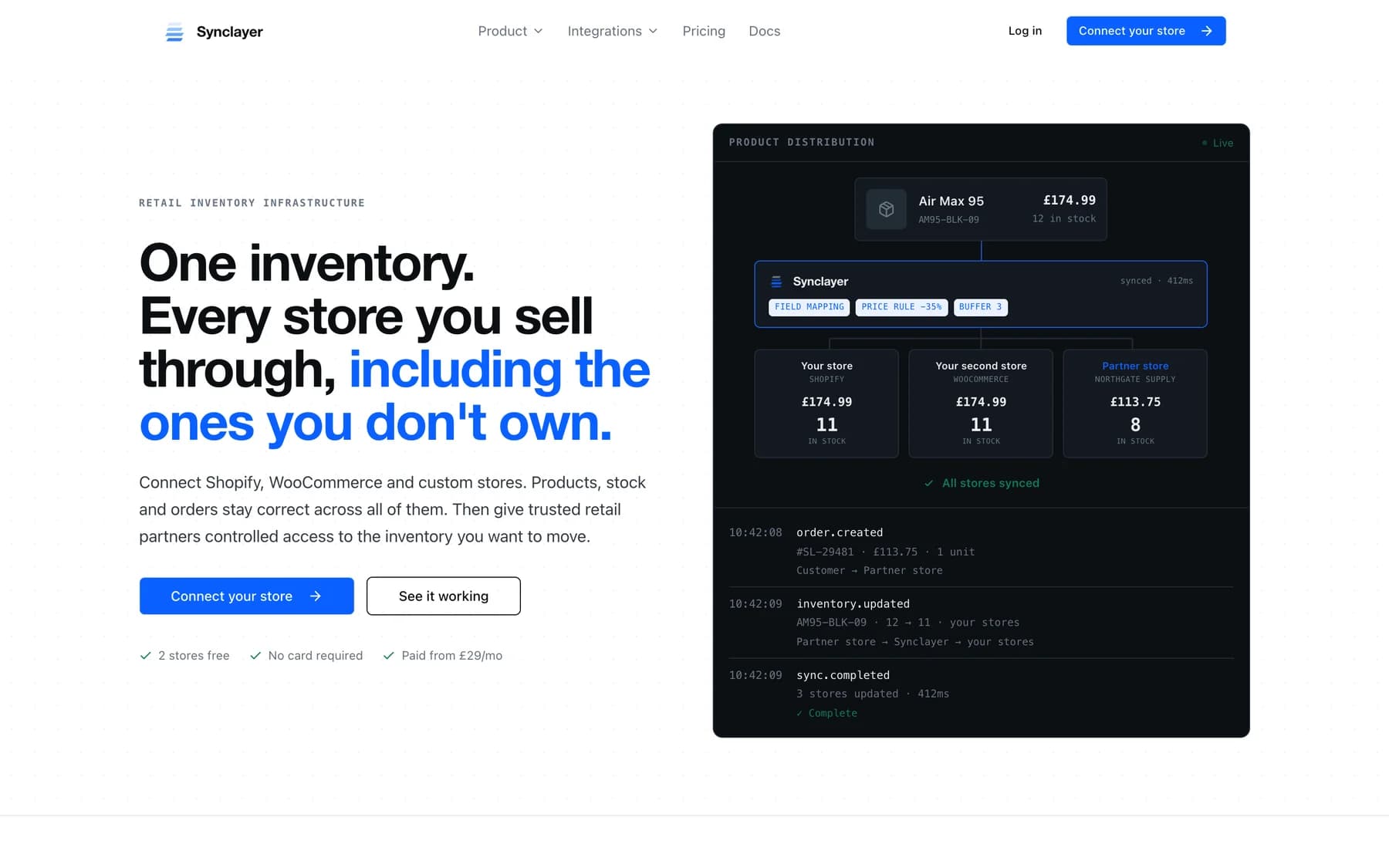
Inventory, product and order sync across Shopify, WooCommerce and custom storefronts, with a retailer network on top.
Resoled sellers kept telling us the same thing: they listed the same stock on Resoled and on their own sites, and keeping both right by hand stopped working at a few hundred products. SyncLayer is the tool they needed and could not buy.
- Role
- Founder and product lead. Discovery, product definition, requirements, pricing, integration and reliability decisions, the scope of the AI agent, QA and launch.
- Timeline
- 2026 to now
- Stack
- React, Node, PostgreSQL, Drizzle, Mollie, Shopify API, Anthropic SDK
- Store types: Shopify, WooCommerce, custom REST
- 3
- Tools available to the AI agent
- 19
- Automated tests across 9 suites
- 73
- Monthly recurring revenue from early customers
- £600
Tool and test counts are from the SyncLayer codebase. Revenue is a company figure as at September 2026.
The problem
It started with sellers on Resoled
Sellers kept reporting the same thing: they listed the same stock on Resoled and on their own websites, and keeping both right by hand fell apart at a few hundred products.
When a pair sells on one storefront and the count on the other does not move, the seller either oversells stock they no longer have or holds back stock they could be selling. Overselling costs a refund and a reputation. Under-listing costs the sale quietly. Most sellers were absorbing it with a spreadsheet and someone's evening.
The obvious move was to point them at an existing tool. Syncio solves a version of this problem well, but it is built around Shopify on both ends, and Resoled is a custom marketplace. There was no way to connect it. That gap became the product.
Users and context
Built for the merchants the category leaves out
Inventory sync is an established, paid-for category, so the usual zero-to-one question, will anyone pay, was already answered. The useful question was narrower: who is being turned away? The answer was independent retailers running a custom build, a headless storefront or a marketplace that is not a hosted platform.
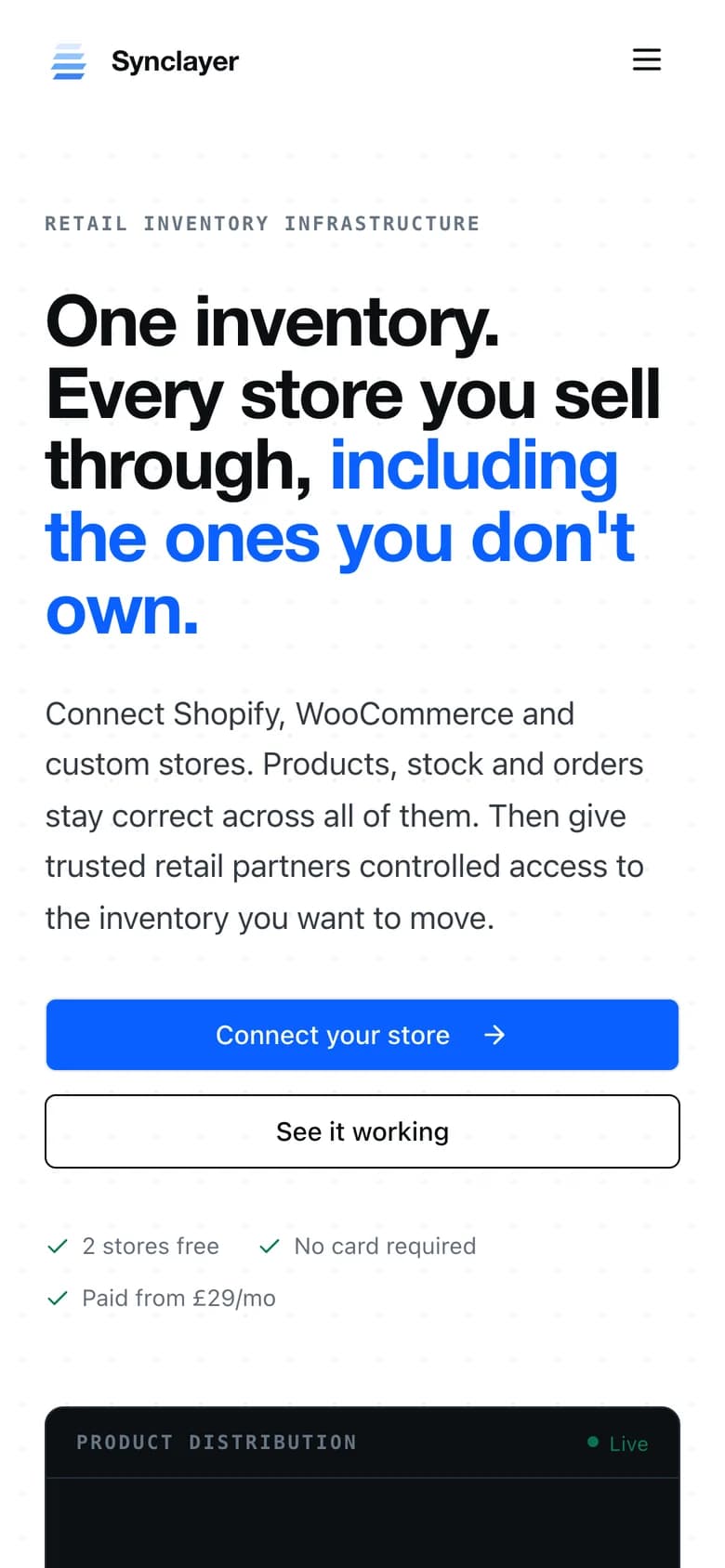
SyncLayer is platform-agnostic first. Shopify and WooCommerce are two supported cases, and custom stores connect through the same REST API and webhooks as everything else. These buyers are store owners, not developers, so connecting a store had to take minutes, need no migration and change no code on their side.
A change in one place becomes the same change everywhere, or a visible failure.
Product decisions
Design for failure, not the happy path
Webhooks get redelivered and third-party APIs go down. A sync tool loses a merchant's trust the first time it is wrong without saying so, so each piece of reliability work below traces back to a real failure or a real customer question.
Idempotency
The same event processed twice must have the same effect as once. Without it, a retried webhook double-decrements stock.
Retry queue
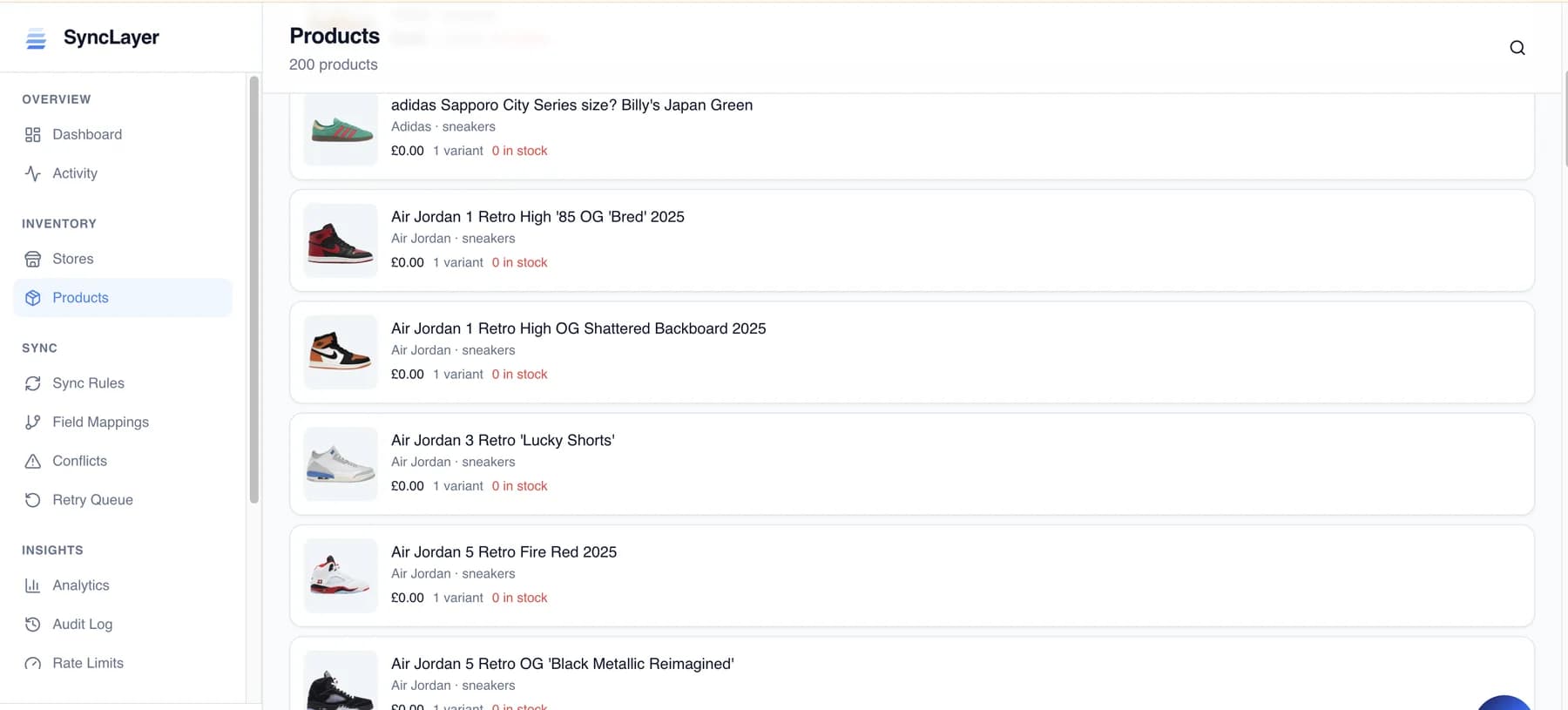
Failed updates are retried with backoff and stay visible in a queue the merchant can see, rather than failing silently.
Conflict visibility
When two sources disagree, the product shows the conflict with the data behind it and a way to resolve it. It does not guess quietly.
Tenant isolation
One merchant's stores, rules and data can never leak into another's, however the request arrives.
Pause semantics
Pausing a store has a defined meaning for the changes that arrive while it is paused, so a merchant knows exactly what happens when they resume.
Duplicate-subscription guard
Added after a redelivered billing webhook once created a second recurring subscription for the same customer.
AI in the product
An agent with a clear job description
SyncLayer ships an assistant built on the Anthropic SDK with 19 defined tools. The product decision was not what it could do. It was what it may do, what needs confirmation, and what it must never touch on a live customer catalogue.
Merchants are mostly non-technical, so the agent acts rather than explains: it connects the store, creates the rule, and then says in plain terms what it did.
Does on request
- Connects Shopify, WooCommerce and custom stores
- Creates sync rules and imports products
- Diagnoses sync errors and checks the retry queue
- Suggests field mappings from CSV headers
- Drafts product descriptions
Confirms first
- Deleting a store connection
- Deleting a sync rule
- Any other destructive action
Cannot touch
- Stock levels and prices on a live catalogue
- API keys and secrets, unless the merchant asks
- Internal identifiers
Features and integrations
What the product covers
A sync engine, a merchant dashboard and the operational tooling around both.
Store connections
Shopify over OAuth, WooCommerce with consumer keys, and custom stores through the REST API.
Sync rules and field mappings
Per-store rules and mappings, so catalogues that do not match structurally can still sync.
Conflicts and retry queue
Visible disagreements with a resolution path, and automatic retries the merchant can inspect.
Orders and routing
Order sync, with orders routed to the store that actually holds the stock.
Audit and activity
An audit log and activity feed, so a merchant can always answer what happened to a given SKU.
Developer surface
REST API, webhook debugger, API keys and documented rate limits.
Forecasting and reorder
Inventory forecasting and reorder support across connected stores.
Billing
Free, £29, £79 and £199 plans plus enterprise, on Mollie or through Shopify's own billing API.
Billing runs on Mollie subscriptions with a monthly mandate, a £0 first payment and a seven-day trial. Shopify merchants have a second path through Shopify's own billing API.
What comes next
From sync to a retailer network
Once stores are connected, the same infrastructure can do more than keep counts in step.
A retailer can list another retailer's stock on their own storefront, and when a customer buys, the order routes to whoever holds the unit. That turns a maintenance tool into a growth one: sell without holding the stock.
The retailer network is in early access, and the product labels it that way. Every capability on the SyncLayer site is marked as available now, early access or on the roadmap, so it is always clear what the product does today.
Lessons
What we would tell the next B2B founder
Your users will tell you the next product
SyncLayer exists because Resoled sellers described the same pain repeatedly. Listening to an adjacent problem was cheaper than any market research.
Reliability is the feature
Nobody buys a sync tool for its dashboard. They keep it because it is right, and because when it is not, it says so.
Scope the AI before you build it
Writing down what the agent may never do took less time than any single tool, and it is the part merchants ask about first.
Building something like this?
Tell us what you have in mind. You will get an honest view of scope, sequence and cost.
Next project
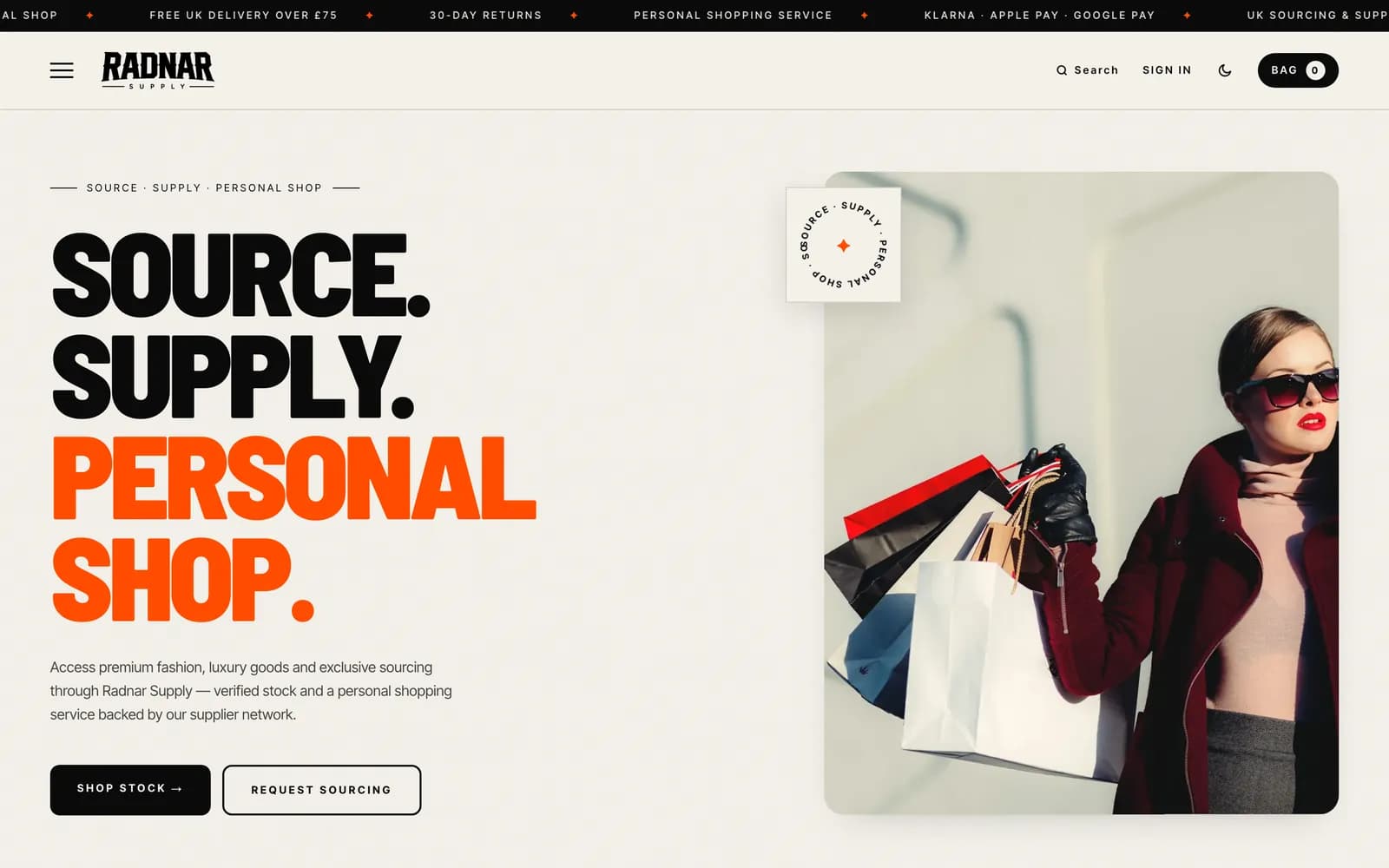
Radnar Supply
A premium fashion storefront with a personal sourcing service built in. Brief to live in seven days.